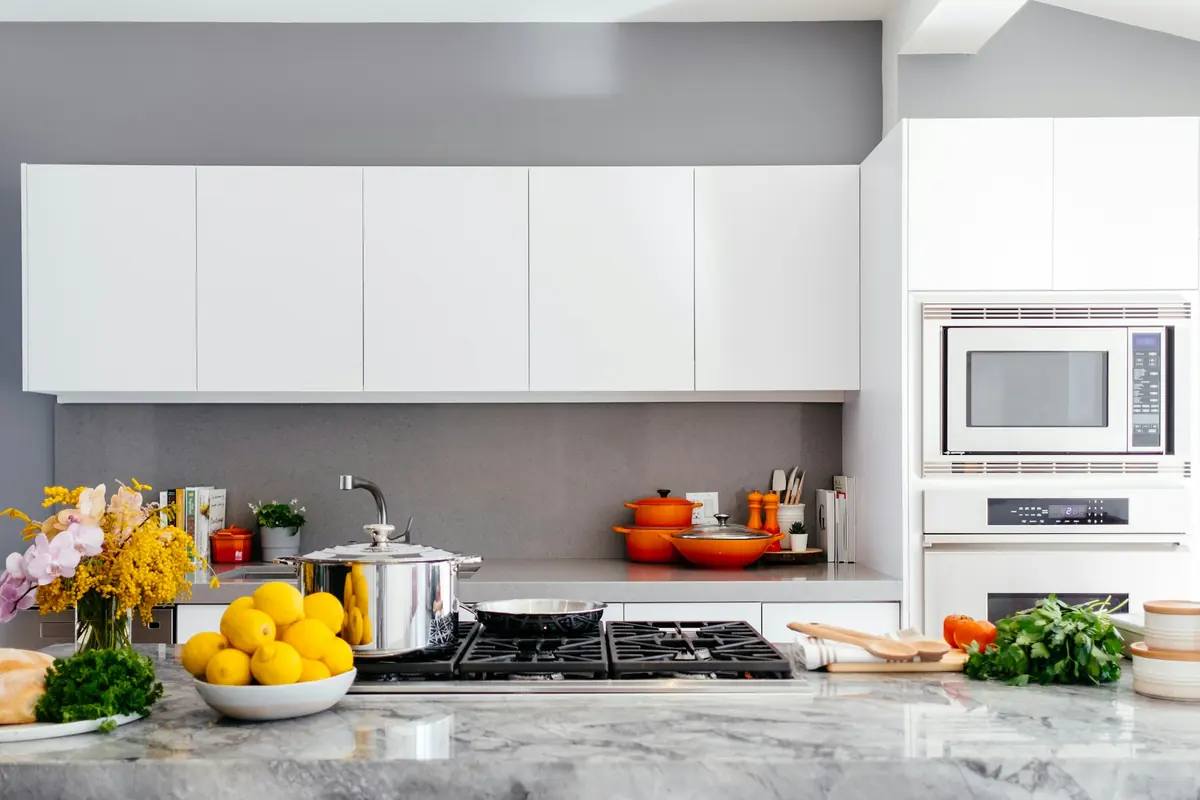
When a kitchen has almost no counter space, every item has to justify its place. The goal is to keep one clear area for food preparation and move everything else up, onto walls, or out of the room.
Step 1: Edit before you organize
- Empty one cupboard or drawer at a time.
- Remove duplicates and anything you have not used in a year.
- Move rarely used items, such as holiday bakeware, to a closet or a high shelf.
Step 2: Keep only daily items on the counter
Choose the appliances you use every day, and store the rest. A coffee maker may earn its place, while a stand mixer used twice a year does not. Check our Kitchen guides before buying anything bulky.
Step 3: Use your walls
- A magnetic knife strip clears a knife block from the counter.
- A rail with hooks holds utensils, mugs and small pans.
- Open shelves can store everyday plates, as long as you use them often enough to keep them dust-free.
- If you rent, use removable adhesive hooks within their weight limit, or ask before drilling.
Step 4: Use the space you are not using
- Above the fridge: store light, rarely used items in bins.
- Inside cabinet doors: add racks for lids, spices or cleaning cloths.
- Under shelves: hanging baskets make use of empty air in tall cupboards.
- Under the sink: use stackable drawers and leave room for pipes.
Step 5: Create extra work surface
- Use an over-the-sink cutting board.
- Add a slim rolling cart that fits beside the fridge.
- Fold-down wall tables add space when needed.
- A stovetop cover can work when burners are cool, but never use one near heat.
Keep it working
Store items near where you use them, wash as you cook, and clear the counter after every meal. A small kitchen stays usable when one clear spot stays clear.
Planning a bigger change? Use the Home & Garden Project Planner.