A room looks expensive because of how it is put together, not only because of what things cost. These simple changes can lift budget pieces.
Get the proportions right
- Choose a rug large enough for the front legs of your furniture to stand on it.
- Hang curtains high and wide.
- Hang art at eye level, and choose pieces that suit the wall.
Upgrade small details
- Replace cabinet knobs and handles. Keep the originals if you rent.
- Swap basic lampshades for larger, better-shaped ones.
- Change plastic switch plates or dated light fixtures, if you are able to do it safely.
Use a restrained color palette
Limiting yourself to a few colors helps mismatched items look intentional. Repeat a color or finish in two or three places.
Mix in natural materials
Real wood, stone, linen, wool, ceramics and plants add depth to inexpensive items. Secondhand stores are good sources of solid furniture and frames.
Frame your art
A simple frame with a wide mat can make an inexpensive print look like gallery work.
Improve the lighting
Use warm bulbs and several lamps instead of one bright overhead light. This single change can transform a room in the evening.
Edit
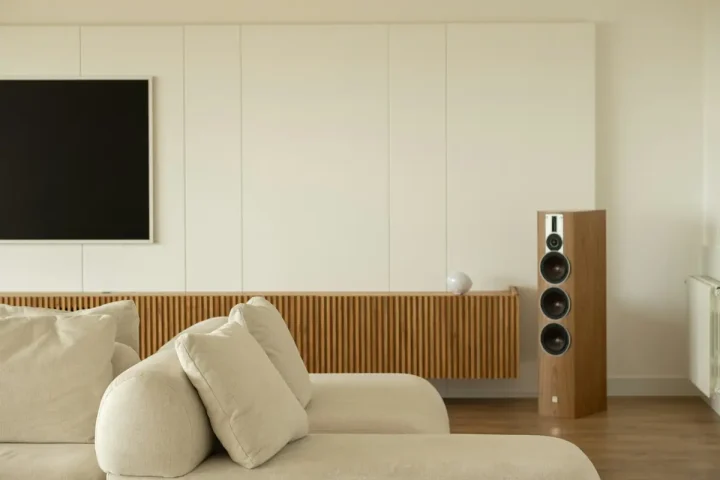
Clutter makes anything look cheap. Keep fewer objects, and give them space. For ideas on calmer rooms, read our guide to minimalist living rooms.