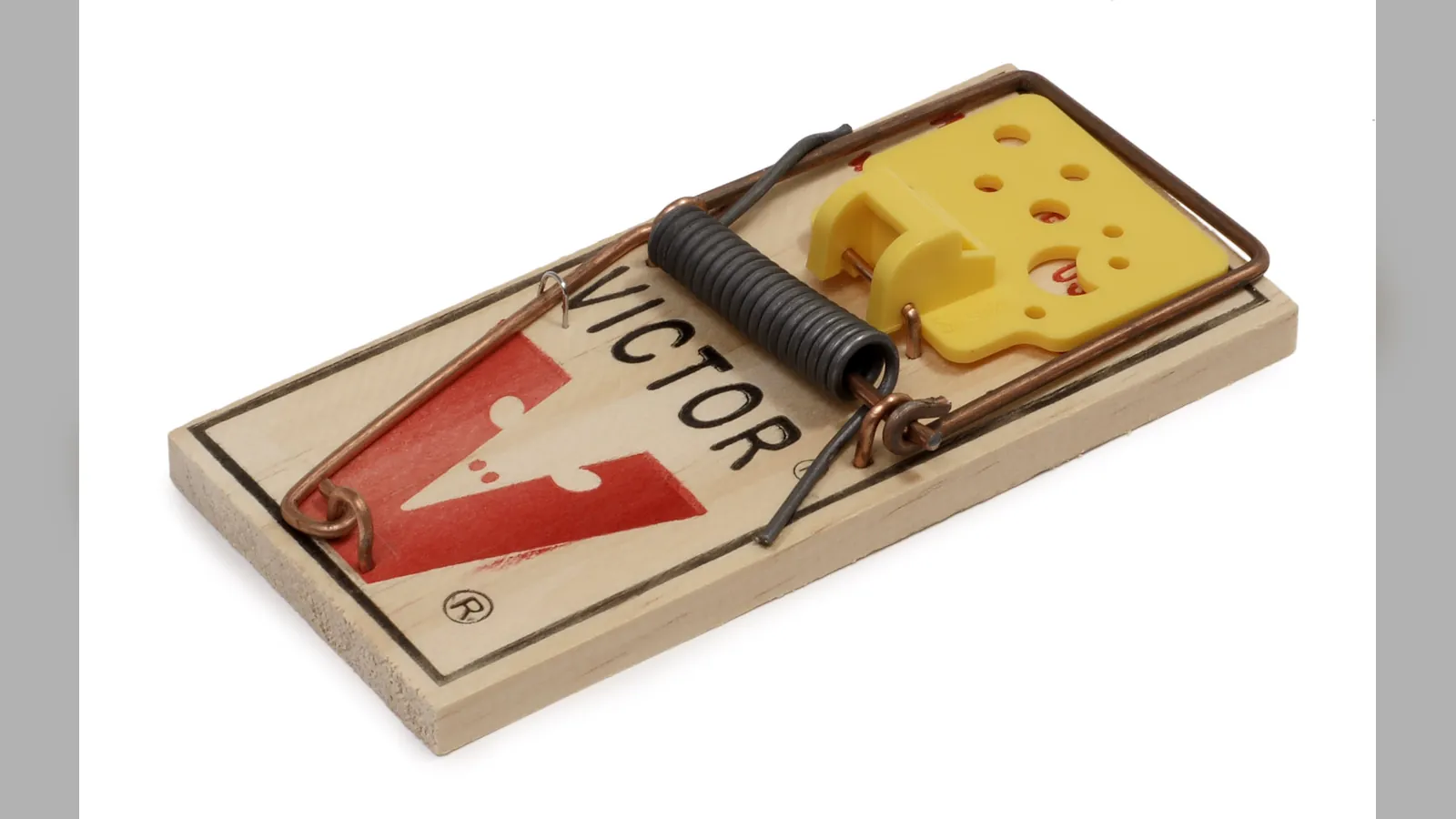
Forget the cartoon cheese. Sticky, strong-smelling foods tend to work best, because mice have to stay on the trap to eat them.
Baits that work well
- Peanut butter: the classic choice. It is sticky, smelly and cheap. Use another option if anyone in the home has a nut allergy.
- Chocolate spread or soft chocolate: appeals to their taste for sweet food.
- Bacon or soft meat: has a strong smell.
- Oats and seeds: match their natural diet. Stick them on with a little spread.
- Nesting material: cotton or string can attract mice in colder months when they are building nests.
How much to use
A pea-sized amount is enough. Too much lets mice lick it off without triggering the trap.
Where to put traps
- Mice run along walls, so place traps along walls and behind appliances.
- Put snap traps at a right angle to the wall, with the trigger end facing it.
- Use several traps, spaced a few feet apart in active areas.
- Keep traps away from children and pets. Use covered bait stations where needed.
Handling safely
- Wear gloves when handling traps, or cleaning up.
- Do not sweep or vacuum droppings, since this can stir up germs. Follow CDC guidance by wetting them with disinfectant first.
- Dispose of mice in a sealed bag, and wash your hands well.
Stop them getting in
Seal gaps with steel wool and caulk, store food in sealed containers, and clear up crumbs. If the problem continues, call a licensed pest control professional.