This guide is based on independent research into published specifications and standards. South Report has not physically tested the products discussed, and it does not name a single winner where the right choice depends on your setup.
In a small apartment, an air purifier has to work hard without taking over the room or keeping you awake. Sizing it correctly matters more than any extra feature.
Size it by CADR, not by the box
Clean Air Delivery Rate (CADR) tells you how much filtered air a purifier delivers. A common guideline from the Association of Home Appliance Manufacturers (AHAM) is to choose a CADR of at least two-thirds of the room’s area in square feet.
| Room size | Minimum smoke CADR |
|---|---|
| 150 sq ft | 100 |
| 250 sq ft | 167 |
| 350 sq ft | 233 |
| 500 sq ft | 333 |
For a studio, use the full open floor area. For a one-bedroom, either choose a portable unit or put one where you spend the most time, which is usually the bedroom.
Prioritize quiet running
In a small space you will sit close to the unit. Check noise levels in decibels at the setting you will really use, not only on the lowest setting. Choosing a purifier rated above your room size lets you run it at a lower, quieter speed.
Check the filter
- Look for a true HEPA filter for fine particles.
- Add an activated carbon stage if cooking smells or odors are a concern, and note that thin carbon layers do little.
- Compare the yearly cost and availability of replacement filters.
Avoid ozone
Ozone irritates the lungs. Avoid ozone generators, and be cautious with ionizers. In the US, look for models that meet California Air Resources Board (CARB) requirements.
Fit it to your space
- Measure the footprint and allow clearance around the air intake and outlet.
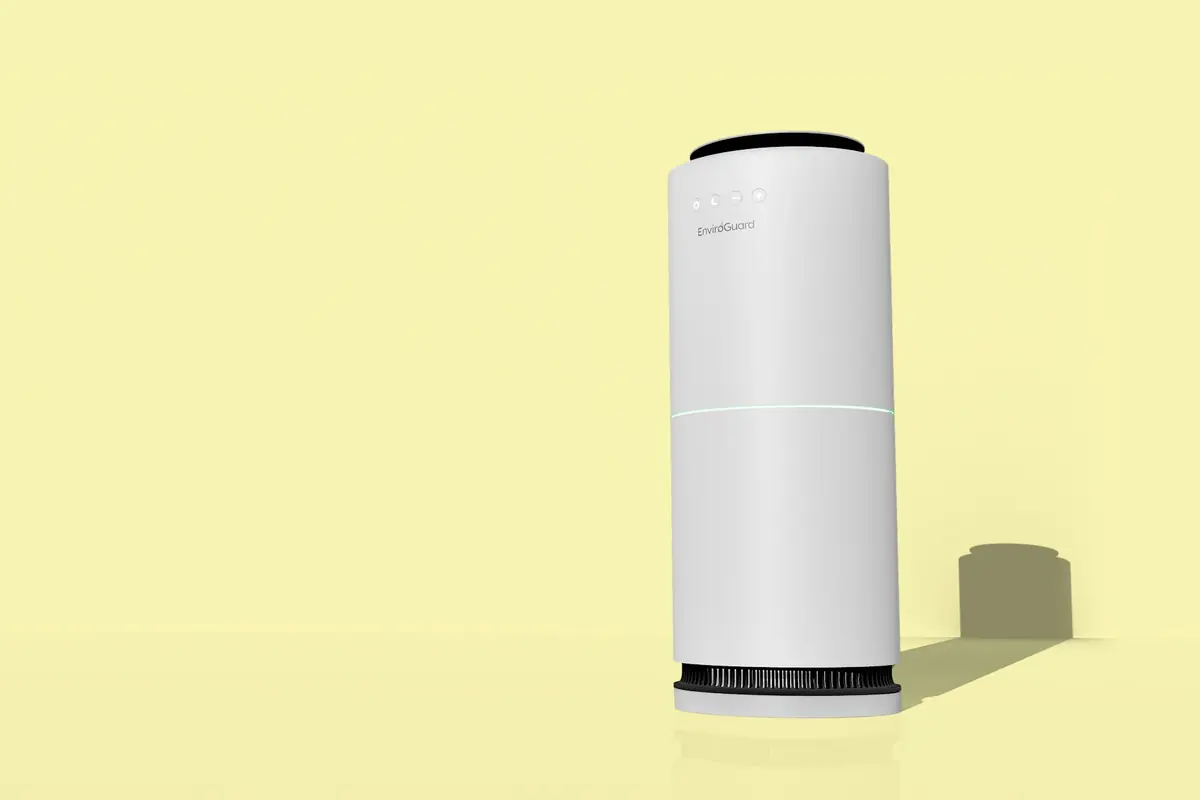
- Check that a slim tower or wall-friendly design suits your layout.
- Look for a low-brightness or sleep mode if it will be in the bedroom.
For more detail, read our Air Purifier Buying Guide, or check filter replacement dates with the Maintenance Tracker.